Casey Koch · 24 September 2026
Tracing the Influence of Regional Climate Variations on Fiber Durability Standards Within Specialized Textile Production Networks
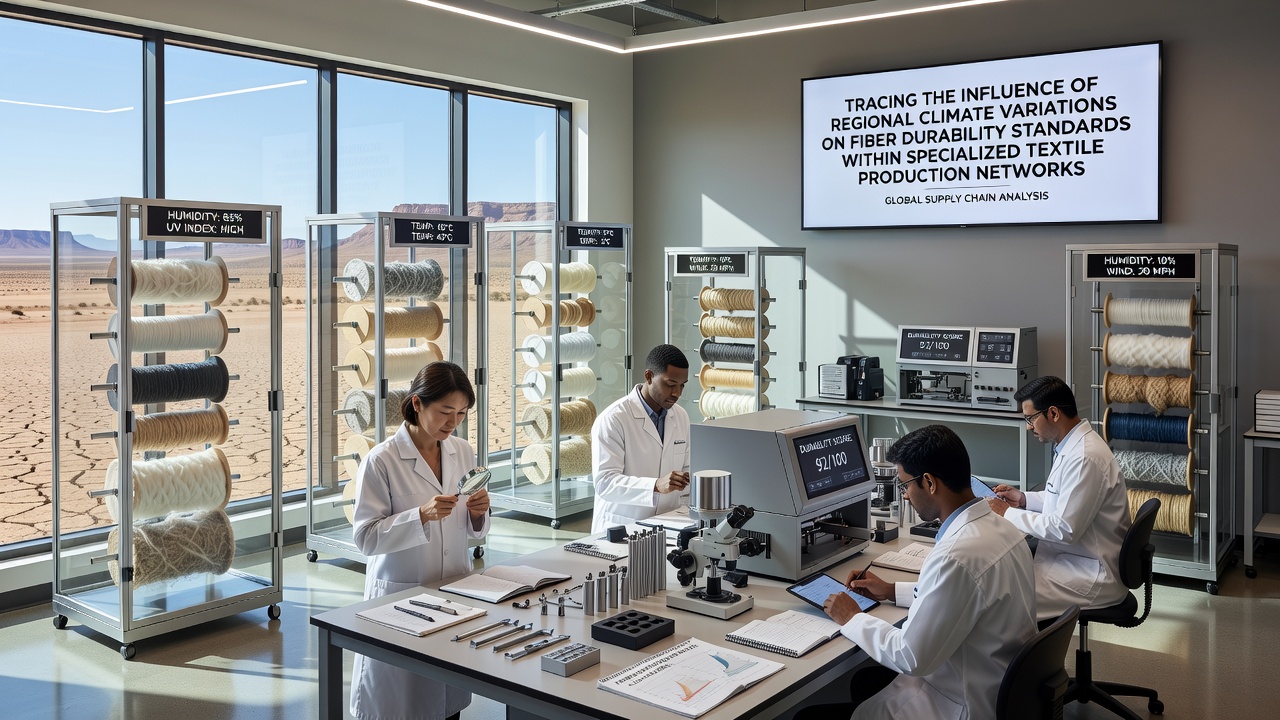
Regional climate variations shape fiber durability standards across specialized textile production networks because temperature fluctuations, humidity levels, and precipitation patterns directly affect how natural and synthetic fibers perform during growth, processing, and end use. Observers note that producers in arid zones like parts of Central Asia adjust cotton fiber strength benchmarks to account for intense solar exposure and low moisture, while those in humid subtropical areas of Southeast Asia modify silk and linen protocols to address mold resistance and tensile retention under constant damp conditions. Data from agricultural monitoring programs shows these adjustments occur through iterative testing cycles that incorporate local meteorological records spanning decades.
Climate Drivers in Fiber Cultivation and Initial Processing
High daytime temperatures combined with low overnight humidity accelerate lignin degradation in bast fibers such as flax and hemp, prompting mills in Mediterranean climates to raise minimum breaking strength thresholds during the retting stage. In contrast, consistent rainfall in temperate river valleys supports longer staple lengths in wool but requires updated abrasion resistance criteria to prevent felting during scouring operations. Research indicates that seasonal shifts documented by national weather services lead networks to recalibrate equipment settings and chemical treatments so that finished yarns meet downstream performance expectations regardless of origin.
Production facilities located near the equator often integrate accelerated weathering simulations that replicate ultraviolet intensity and diurnal temperature swings recorded over the past thirty years, whereas facilities in higher latitudes incorporate freeze-thaw cycle data to validate fiber resilience before export. Those who've tracked supply chain documentation observe that these localized protocols feed into broader certification frameworks, ensuring traceability from farm to finishing plant.
Standards Evolution Across Global Networks
Specialized textile networks coordinate durability standards through shared databases that aggregate climate-influenced performance metrics from multiple continents. When precipitation patterns change in cotton-growing districts of the American Southwest, for instance, ginning operations update moisture regain specifications that influence subsequent spinning adn weaving tolerances. European regulatory bodies have incorporated similar regional adjustments into harmonized testing methods that reference both historical climate normals and recent anomaly reports.
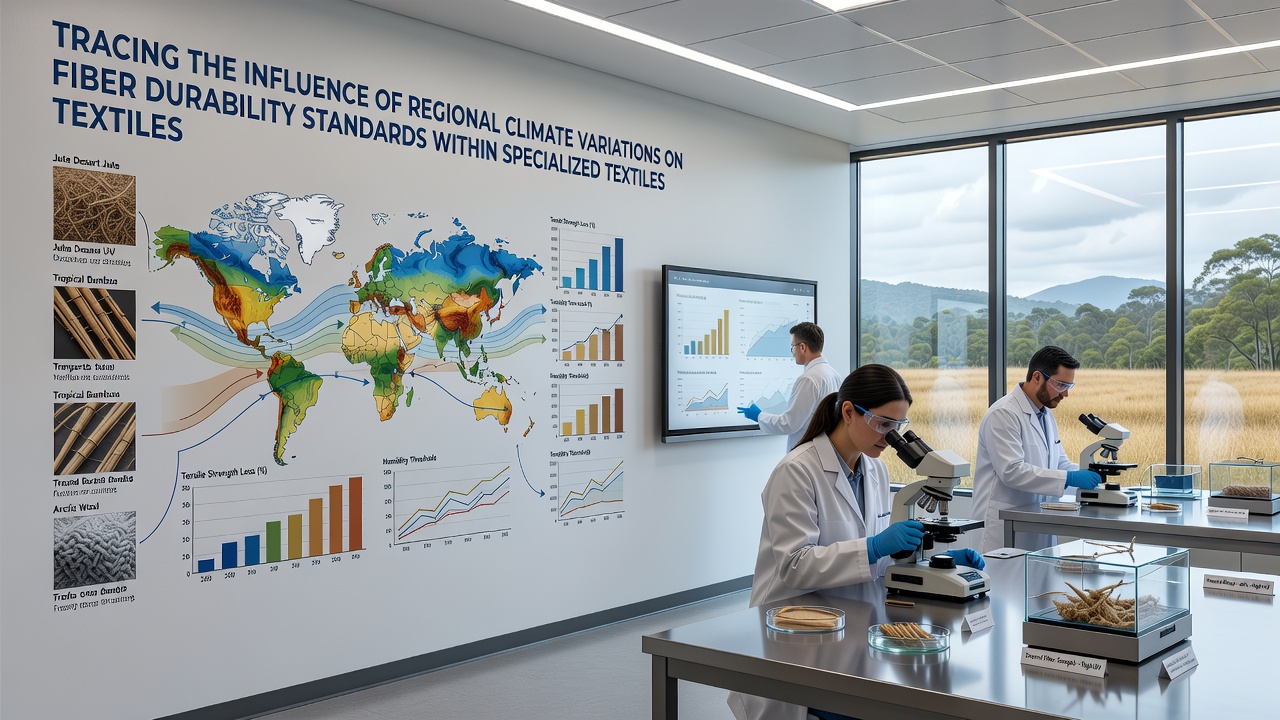
September 2026 saw the release of updated guidance from the International Organization for Standardization that explicitly references climate zone classifications when establishing minimum elongation and recovery values for performance fabrics. Networks serving automotive and protective apparel sectors responded by cross-referencing these guidelines with proprietary field trial results collected from partner mills in Australia and South America. The result has been a more granular set of acceptance criteria that reflect actual environmental stressors rather than uniform global assumptions.
Supply Chain Adaptations and Testing Integration
Logistics managers within these networks route fiber lots through climate-specific quality gates before they enter high-value finishing stages. A shipment of alpaca from high-altitude Andean plateaus undergoes additional compression recovery tests calibrated to the dry, cold conditions prevalent during shearing season, while equivalent volumes of modal from temperate European forests receive humidity cycling protocols that mirror local growing conditions. Such differentiation prevents downstream failures and supports consistent product claims across markets.
Industry reports compiled by research institutes in Canada and Japan illustrate how digital twins of production lines now ingest real-time climate feeds to forecast when durability margins may narrow. Facilities using these tools adjust chemical formulations or mechanical settings on the fly, maintaining compliance without over-engineering every batch. The approach reduces material waste while preserving the performance characteristics required by technical textile buyers.
Conclusion
Regional climate variations continue to drive refinements in fiber durability standards as production networks integrate meteorological data into every stage of cultivation, processing, and certification. Updated protocols issued through international bodies and national agencies ensure that textiles derived from diverse growing environments meet uniform performance expectations once they reach end users. Continued monitoring of climate trends allows these networks to maintain consistency across shifting environmental conditions without disrupting established supply relationships.